Dental Implants in Tulsa: Restoring Smiles with Permanent Solutions
Missing teeth can take a toll on more than just your smile – they affect your ability to eat, speak, and feel confident. If you’re in Jenks, Oklahoma and dealing with a missing tooth (or several), you’ve probably heard about dental implants as the gold standard solution. As an oral surgeon who serves many patients from Jenks, I want to give you an inside look at why implants are such a game-changer and how we at Elite Oral Surgery can help you restore your smile permanently.
This post will break down what dental implants are, their benefits over other options, the treatment process, and why choosing an experienced surgeon matters. My tone here is educational and authoritative, but also relatable – think of it as advice from a knowledgeable friend (who just happens to have an advanced degree in fixing smiles!). I’ll also sprinkle in some local flavor and considerations specific to folks in Jenks and the Tulsa area. Let’s dive in!
Why Dental Implants? The Closest Thing to Natural Teeth
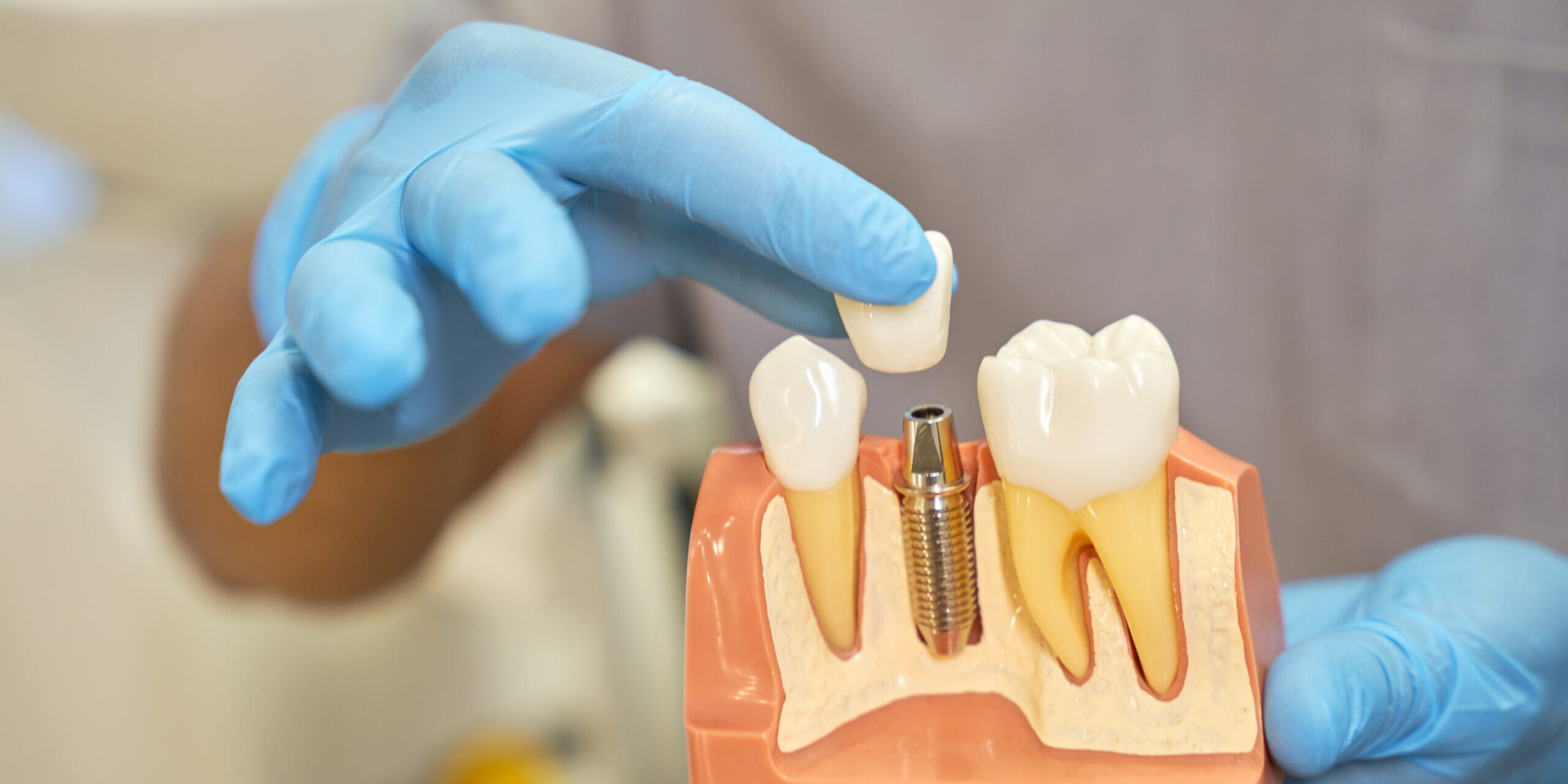
First, a quick primer: A dental implant is a small titanium post that we insert into the jawbone, essentially taking on the role of a tooth root[29]. Once it heals and fuses with the bone (a process called osseointegration), we can attach a lifelike crown, bridge, or even full denture on top. The result? A replacement tooth (or teeth) that looks, feels, and functions almost exactly like the real thing.
For our Jenks patients weighing options, here’s how implants stack up:
- Longevity: Implants are designed to be a long-term or permanent solution. With proper care, an implant can last decades or even a lifetime[30]. Compare that to a dental bridge (which might last 10-15 years) or a denture (which often needs refitting/replacing and offers far less function). It’s no surprise that more than 3 million implants are placed annually in the U.S., and that number is growing[11].
- Bone Health: Remember that bone loss we discussed in the bone grafting post? When you lose a tooth, the jawbone in that area starts to resorb. Implants are the only tooth replacement that actually stimulates and preserves the bone, because they transmit forces to the jaw like natural roots[31][32]. Bridges and dentures do not stop bone loss (in fact, a removable denture can accelerate it by pressing on the bone). Preserving bone means maintaining your facial structure – avoiding that “sunken” look.
- Stability & Function: An implant is anchored in bone, so it’s rock-solid. You can bite into a crisp apple or corn on the cob with confidence. Traditional dentures, on the other hand, might slip or reduce your biting force to as low as 20% of normal[2], making it hard to chew tougher foods. Even a bridge relies on neighboring teeth for support, which can’t match the stability of an implant that’s secured in your jaw.
- Conservation of Other Teeth: To make a dental bridge, the two adjacent teeth must be shaved down to serve as posts for the bridge. That’s drilling on two healthy teeth to replace one missing tooth. With an implant, we leave your other teeth untouched. They stand on their own, which is better for their long-term health.
- Natural Look and Feel: Implants are topped with custom-crafted crowns made of porcelain or zirconia that mimic natural enamel. It’s very hard for anyone – even a dentist – to spot an implant in your mouth if it’s well done. They don’t come out at night, they don’t affect your speech (ill-fitting dentures sometimes cause slurs or lisps), and you clean them just like your other teeth (brush, floss)[6].
In short, dental implants give Jenks patients a second chance at a tooth that’s as close to Mother Nature as possible. That’s why I often say: If you’re missing a tooth, an implant is usually the best investment you can make in your oral health.
The Implant Process: Step by Step
You might be curious (or anxious) about how the implant process actually works. Let me outline the typical journey our Jenks patients go through:
- Consultation & Planning:This is where it all begins. In ourinitial meeting, we’ll chat about your goals and medical history, and take a 3D CBCT scan of your jaws. This scan is incredible – it lets us assess the exact bone volume and even “virtually” plan the implant on a computer beforehand[33]. If we see any bone deficiencies, we discuss grafting (as covered earlier). We’ll also talk about sedation options if you’re nervous. By the end of this appointment, you’ll have a clear plan and quote, and we’ll handle any insurance pre-authorizations.
- Implant Placement Surgery:Don’tlet the word “surgery” scare you – placing a single implant is often quicker and simpler than, say, removing a wisdom tooth. We numb the area thoroughly. If you opted for IV sedation, you’ll be nice and relaxed or snoozing. I make a small incision in the gum and use precision drills to create a channel in the bone. Then the implant (which looks like a tiny screw) is inserted into this space[34][35]. Often, a single stitch or two is all that’s needed to close the gum over or around the implant. For a straightforward case, the procedure can take just 30-60 minutes. You walk out with a little gauze, a numb lip, and anew titanium tooth root in place!
We may give you a temporary tooth or appliance to fill the gap during healing if it’s in a visible area (for front teeth, we never leave you without something to fill the space). If the implant is replacing a back tooth, usually nothing additional is needed during healing.
- Healing & Osseointegration:Now we let nature do its thing. Over the next few months (commonly ~3-4 months for lower jaw,maybe 4-6 months for upper jaw), the bone will fuse to the implant[36]. This period is critical – it’s why we often don’t rush to put weight on the implant immediately. We want it to become rock solid. During this time, you’ll likely forget it’s even there. We’ll see you for a quick post-op check a week or two after placement, just to ensure the gum is healing well and there’s no sign of any issue. You should experience minimal discomfort after the first few days – most patients say it was far easier than expected.
- Abutment & Crown Placement:Once the implant is integrated (we might take an X-ray or use a torque test to confirm),it’s time to restore it. If your dentist referred you to us, you’ll go back to them for this part. If you don’t have a dentist, we’ll coordinate with one of the excellent cosmetic dentists we work with in the Jenks/Tulsa area. An abutment (a small connector piece) is attached to the implant[37][38], and a custom crown is made to screw or cement on top. The color, shape, and size are all matched to your natural teeth. When done, voilà – you have your tooth back! Many patients literally cannot tell the difference between the implant crown and their other teeth.
From start to finish, the process might span a few months, but remember – the result is something that could last a lifetime[30]. A few months of patience is worth decades of enjoying a complete smile.
Full-Arch Implants: Bringing Jenks the All-on-4 and All-on-X Solutions
So far we’ve focused on single or several implants. But what if you’re missing all your teeth in the upper or lower jaw? Jenks is a wonderful community, and I see quite a few patients of the Baby Boomer generation who have faced total tooth loss or who have dentures from years past. For these folks, I want to mention the revolutionary option of All-on-4 full-arch implants (also known as implant-supported dentures or “teeth in a day”).
Instead of an implant for every missing tooth (which could be 14 per arch), All-on-4 uses four (sometimes 5-6) implants to support an entire arch of fixed teeth[3][4]. It’s actually something we specialize in at Elite (we love giving someone a brand new smile in one day). The benefits? You walk out with a fixed prosthetic arch the same day of surgery, you avoid the need for an implant per tooth (saving cost and avoiding more extensive bone grafts), and you get back a full smile that doesn’t come out. We’ve covered All-on-4 in detail in another post, but it’s worth highlighting that for edentulous patients in Jenks, this is truly a life-changing procedure.
One Jenks patient of ours had been in dentures for 10+ years. She told me she missed eating salad (of all things!) because chewing lettuce with dentures is notoriously hard. We did an All-on-4 for her upper arch. At her one-week check, she literally brought a salad to the office to show me, proudly taking a bite and saying, “See, I can chew it now!” Moments like that showcase the power of modern implant dentistry.
Why Choose an Oral Surgeon for Implants? (Experience Matters)
You might wonder, “My regular dentist in Jenks offers implants – why should I see an oral surgeon?” It’s a good question. General dentists can certainly place implants with additional training, and many do a fine job for straightforward cases. However, here’s my perspective (admittedly a bit biased, but honest):
- Training: Oral and maxillofacial surgeons undergo 4-6 years of hospital-based residency after dental school. We place hundreds of implants during training, often in complex situations, and handle complications if they arise. We also are trained in related procedures like bone grafting, sinus lifts, etc.[28]. This extensive experience means we’re equipped to handle anything from a simple implant to the most complicated full-mouth reconstruction.
- Anesthesia Expertise: As a dual-degree surgeon (DMD, MD), I’m certified to provide IV sedation and general anesthesia. This can be a game-changer if you’re anxious or having multiple implants placed at once. Comfort and safety are enhanced in a setting where deep sedation is an option, and our team does it daily. Dentists who aren’t oral surgeons typically offer only local anesthesia or very light sedation.
- Team Approach: Often the best outcomes come from a team approach – the oral surgeon places the implant and the general dentist makes the crown. This way, each professional works to their strength. We collaborate with excellent restorative dentists in Jenks and Tulsa to ensure your implant not only is rock-solid but also that the tooth on top is beautifully made.
- Technology & Precision: Our practice invests heavily in implant technology – from 3D imaging to guided implant surgery tools. We perform immediate implant placements, complex grafts, and even zygomatic implants (extra-long implants for severe bone loss cases) when needed. Having a specialist can broaden the options available to you.
In short, if you have a straightforward single tooth, you have options of providers. But if there’s any complexity (bone loss, sinus proximity, multiple teeth, health concerns, etc.), or you simply want the peace of mind of an expert, seeing an oral surgeon is wise. Your smile is worth it.
Tulsa Community Trust and Our Commitment
Being part of the greater Tulsa community means a lot to us. We’ve treated entire families from the area– the teen who needed wisdom teeth out (and later came back for an implant after a sports injury knocked out a tooth), the mom who wanted to fix a long-time missing molar, the grandfather who finally decided to trade dentures for implant teeth. Building trust through genuine care is our ethos. We never take that for granted.
When you come to Elite Oral Surgery for implants, you can expect: - A no-pressure consultation: We educate and let you make the informed decision. If you’re not ready or want to explore alternatives, that’s okay. We’re here as a resource. - Transparency: We’ll discuss costs upfront, coordinate with insurance, and never surprise you with hidden fees. Implants are an investment – we also offer financing plans to help fit your budget (internal link suggestion: you might link to our Financing page). - Top-notch Sterilization & Safety: In these times (post-2020 world), we know health safety is paramount. Our clinic exceeds required standards for sterilization and patient protection. From thoroughly sterilized instruments to HEPA air filters in surgical rooms, we leave no stone unturned. - Follow-up and Availability: Once you’re an implant patient of ours, you kind of become family. We’re here for any questions during healing, we check your progress, and even years later, we’re happy to see you back for checkups or if you have a concern. I love when a Jenks patient pops in years later just to say hi and show me how well their implant is doing.
Your Permanent Smile Solution Awaits
If you’re done with the inconveniences of missing teeth or fed up with wobbly dentures, it might be time to consider dental implants. They truly are the closest thing to getting your natural teeth back. Whether it’s one tooth or a complete smile makeover, the first step is easy: reach out for a consultation.
Give us a call at 918-395-8305 or book an appointment online. We welcome patients from Jenks, South Tulsa, and all over Green Country. When you come in, you’ll meet a team that is passionate about what we do – restoring smiles and changing lives. It’s not just a tagline; I’ve seen a timid, self-conscious patient turn into someone who beams with confidence after getting their teeth back. That transformation never gets old for me.
At Elite Oral & Maxillofacial Surgery of Oklahoma, we combine world-class expertise with that friendly Oklahoma approach. The result is care that’s as professional as it is personal. If you’re in Jenks and considering dental implants, let us show you why we’re the region’s go-to choice for implant dentistry.
Don’t let missing teeth hold you back. Take the next step toward a complete, confident smile – a permanent solution is within reach!
FAQs about Dental Implants in Tulsa
Q: Are dental implants safe and successful?
A: Yes, dental implants are one of the most successful procedures in modern dentistry. They have been used for decades and refined over time. The overall success rate of implants is around 95-98%[27], which is remarkably high. “Success” means the implant fully integrates with the bone and functions without issues. Of course, success also depends on patient factors like overall health and oral hygiene, but for nonsmokers with good health, the odds are strongly in your favor. As for safety, implants are made of biocompatible materials (usually titanium, which is the same metal used in orthopedic hip and knee replacements). Your bone actually bonds to it. Complications are rare, but as with any procedure, they can include infection or implant loosening. In our practice, we plan carefully and use sterile technique to minimize risks. We also only proceed with implant placement if conditions are ideal (for example, we’d graft first if needed, rather than placing an implant in inadequate bone and risking failure). When properly treatment-planned and placed, implants are very safe.
Q: Do implants require special care or maintenance?
A: The beauty of implants is that caring for them is much like caring for natural teeth. You should brush twice a day and floss daily around your implant crown (there are special flosses and tiny brushes that can help get under implant bridges if you have those). Regular checkups with your dentist are important – typically twice a year, just like for natural teeth, so they can professionally clean around the implant and ensure the gums are healthy. Implants themselves don’t get cavities (hooray!), but you can still get gum issues around them if plaque is not kept in check. So good oral hygiene is key. Another tip: avoid using your teeth (including implants) as tools – like opening packages or biting very hard non-food items. While an implant tooth is very strong (nearly as strong as a real tooth, some studies say up to 80-90% of natural bite force[39]), it’s not indestructible. Treat it with care and it will treat you well. Overall, no fancy maintenance is needed – just good old brushing, flossing, and regular dental visits.
Q: What if I’m missing multiple teeth in a row? Do I need an implant for each tooth?
A: Not necessarily. If you have several missing teeth in a row, we can often use one implant to support more than one tooth, depending on the situation[40]. For instance, two implants can sometimes support a 3- or 4-tooth bridge. This is great because it means fewer implants (and thus fewer surgeries and cost) while still restoring the whole span of missing teeth. Each case has to be evaluated for the amount of biting force in that area and bone support, but implant bridges are a common and very successful solution. In contrast, if teeth are missing in different parts of your mouth (not adjacent), those would typically each get their own implant. For a full arch of missing teeth, that’s where the All-on-4 concept comes in – we’d use 4-6 implants to support a whole arch of prosthetic teeth[3]. So to sum up, no, you don’t always need “one implant per tooth.” We strategically plan the minimum number of implants to restore all missing teeth with proper support. This is something we’d determine in the planning phase and explain to you so you know exactly what to expect.